
Retail execution often determines whether great products actually sell. A distributor can negotiate the perfect placement, launch a promotion, and deliver products on time. If the shelf isn’t stocked correctly or displays aren’t set up as planned, much of that effort disappears before customers even notice the brand.
That’s why retail execution software has become an essential tool for many consumer goods companies. The category covers much more than shelf audits. Modern platforms help field teams document displays, monitor planogram compliance, capture photos, complete store visits, and share information with managers in real time. Some also connect those activities directly with ordering and deliveries, while others remain focused entirely on merchandising.
The best option depends on how your field teams work.
1. Pepperi
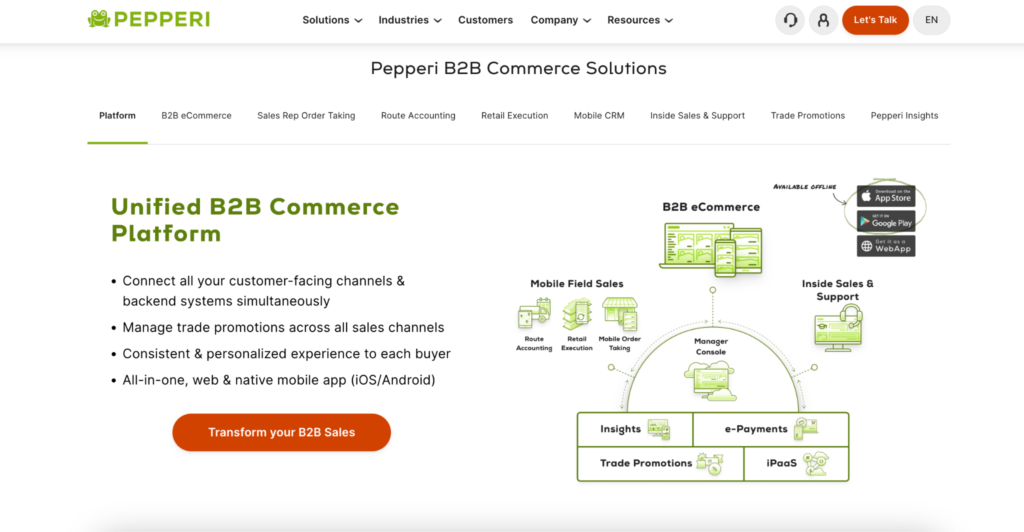
Pepperi approaches retail execution as part of a much broader commercial platform. Large manufacturers often need merchandising, field sales, promotions, pricing, retailer ordering, and reporting connected across multiple markets. Pepperi brings those functions together while allowing organizations to customize workflows around existing business processes.
For enterprise teams managing hundreds of field representatives, that flexibility can become a significant advantage.
Highlights include:
- Retail execution
- Shelf audits
- Task management
- Field sales
- B2B commerce
- Customer-specific pricing
- ERP integrations
- Advanced analytics
Retail execution is only one piece of Pepperi’s platform, making it particularly attractive to larger organizations with complex commercial operations.
A strong option for
Enterprise CPG companies managing large merchandising and sales teams across multiple regions.
2. SimplyDepo
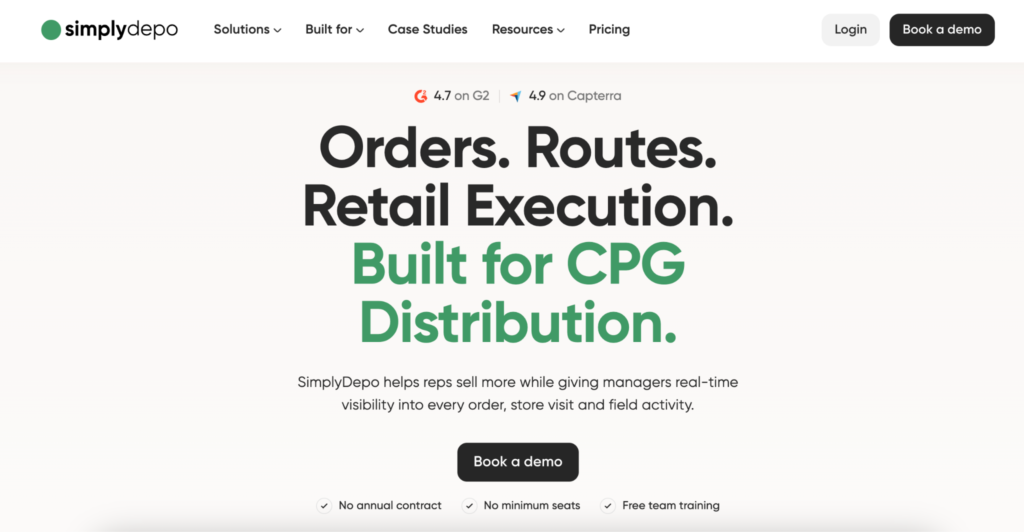
Retail execution rarely happens in isolation. A representative visits a store to take an order, checks shelf conditions, photographs displays, confirms planogram compliance, and speaks with the manager before leaving. Switching between multiple applications during that visit slows everything down.
SimplyDepo combines those activities inside the same workflow used for direct store delivery. Shelf audits, merchandising tasks, and photo reporting happen alongside order capture, mobile invoicing, proof of delivery, and route management. Customer information then synchronizes automatically with QuickBooks Online.
For companies that combine merchandising with field sales, this approach removes the need for dedicated retail execution software.
Key capabilities include:
- Shelf audits
- Planogram compliance
- Photo reporting
- In-store activity tracking
- Mobile order capture
- Route planning
- Proof of delivery
- Van sales
- B2B ordering portal
- Offline functionality
Instead of collecting merchandising data that lives separately from sales activity, SimplyDepo keeps both connected. Managers can see what happened in the store while field representatives continue working without changing applications.
Best fit for
Self-distributing CPG brands that want retail execution, field sales, and direct store delivery managed together.
3. Repsly
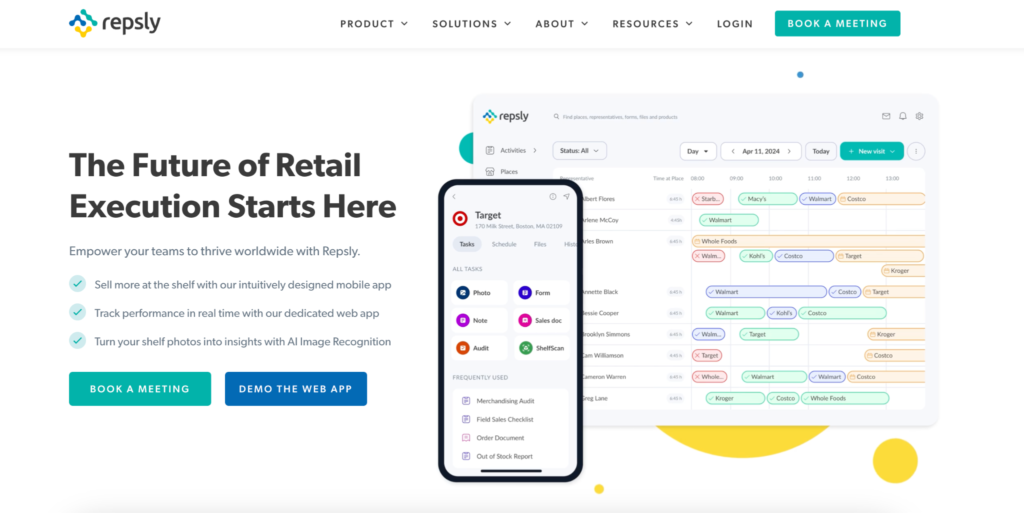
Some companies don’t need delivery management or order capture. They simply want better visibility into what’s happening inside retail stores.
Repsly focuses on that challenge. The platform helps merchandising teams complete store visits, collect shelf data, upload photos, verify promotions, and monitor execution quality across multiple locations.
Core capabilities include:
- Shelf audits
- Photo reporting
- Store visit management
- Merchandising tasks
- GPS verification
- Retail analytics
- Team performance reporting
- Mobile data collection
Its specialization makes it a popular choice for enterprise merchandising programs where operational visibility matters more than delivery workflows.
Worth considering when
Your primary objective is improving retail execution rather than managing DSD or field deliveries.
4. GoSpotCheck
GoSpotCheck is built around one objective: helping field teams collect accurate information from retail locations.
Store visits, compliance checks, photo documentation, surveys, and merchandising tasks all happen through structured mobile workflows. Managers receive visibility into field activity without waiting for spreadsheets or email updates.
For companies running large merchandising programs, that consistency is often more valuable than adding delivery or ordering capabilities.
Key features include:
- Store audits
- Photo reporting
- Survey forms
- Task management
- Mobile data collection
- Field team reporting
- Retail analytics
- Compliance tracking
The platform excels at gathering store-level information, though businesses needing field sales, invoicing, or direct store delivery will typically need additional software alongside it.
Best suited to
Brands running dedicated merchandising or retail compliance programs that operate separately from distribution.
5. Skynamo
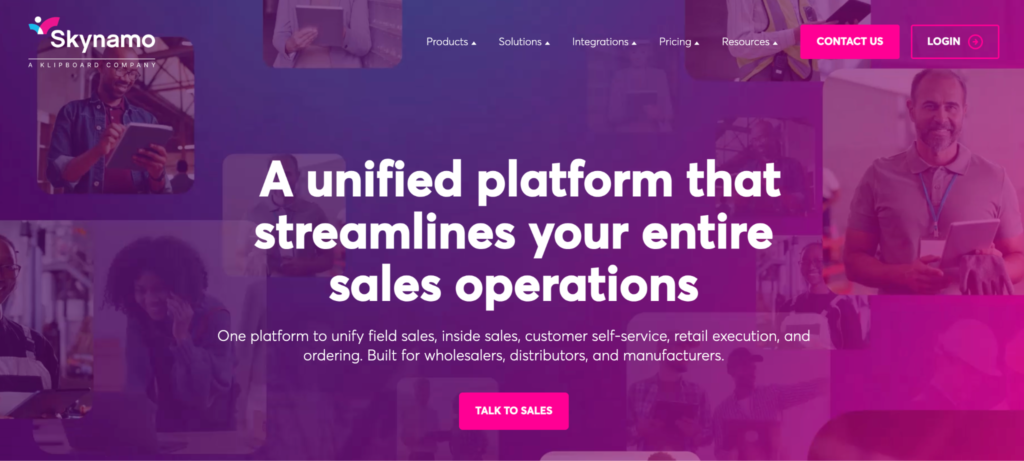
Retail execution doesn’t always begin with merchandising. Sometimes it starts with better customer visits.
Skynamo helps field representatives organize store visits, maintain customer records, capture orders, and document activity while working in the field. Although it isn’t a dedicated retail execution platform, its mobile workflows support many of the daily activities that accompany merchandising visits.
The platform offers:
- Customer visit management
- Mobile order capture
- Product catalogs
- GPS tracking
- Offline functionality
- CRM capabilities
- ERP integrations
- Sales reporting
For organizations where sales representatives also monitor shelf conditions during regular customer visits, Skynamo can cover much of that process without requiring a standalone merchandising application.
A practical option for
Field sales organizations that combine customer management with light retail execution activities.
6. Orderwerks
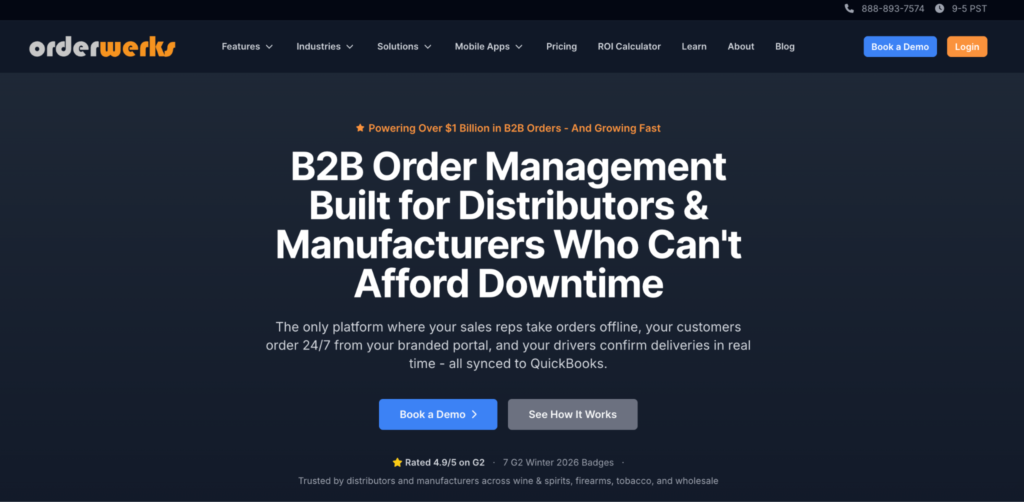
Orderwerks approaches retail operations from the perspective of customer ordering rather than merchandising alone.
Its B2B portal, mobile sales tools, and field applications help distributors keep retailers connected while supporting sales representatives working in the field. Businesses operating in regulated industries often value the platform’s industry-specific capabilities alongside its ordering tools.
Core capabilities include:
- B2B ordering portal
- Mobile field sales
- Customer pricing
- Offline operation
- DSD support
- Multi-accounting integrations
- QuickBooks connectivity
Orderwerks doesn’t compete directly with dedicated shelf audit platforms, but it fits businesses where retail relationships revolve around ordering as much as merchandising.
Worth considering when
Retail ordering and customer servicing are central parts of your field operations.
7. bMobile Route
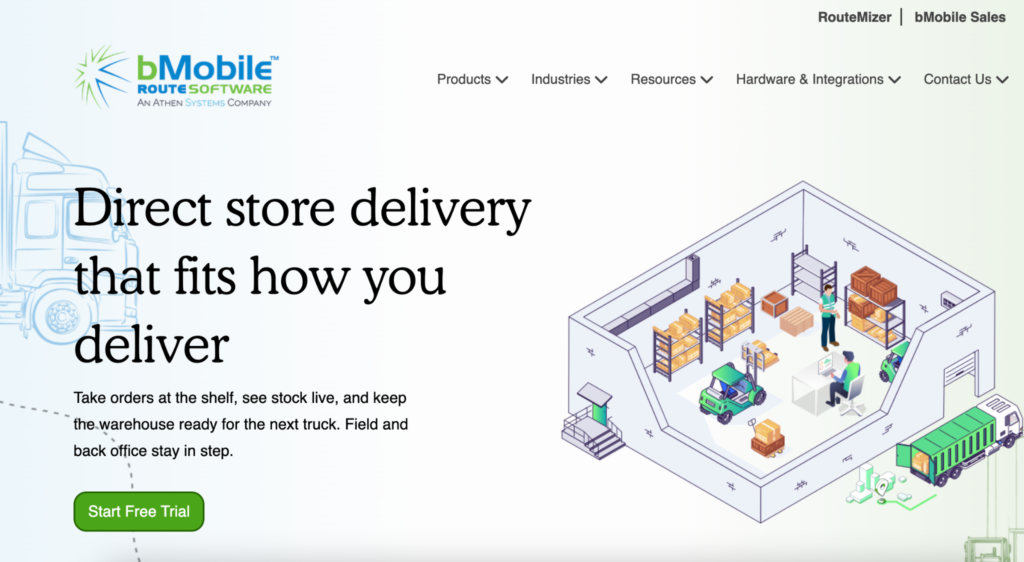
bMobile is better known for route accounting than merchandising, but many distributors still use it as part of their retail operations.
Field teams can manage deliveries, inventory, invoicing, and customer visits while keeping operational data connected across the business. That makes it useful for companies where successful retail execution depends on consistent deliveries as much as attractive shelf displays.
Highlights include:
- Route accounting
- Delivery management
- Truck inventory
- Mobile invoicing
- Inventory tracking
- Reporting
- ERP integrations
Businesses focused entirely on merchandising will probably prefer more specialized retail execution software. Those combining store servicing with deliveries may appreciate bMobile’s operational depth.
A solid fit for
Distributors that see retail execution as one piece of a broader delivery operation.
8. LaceUp Solutions
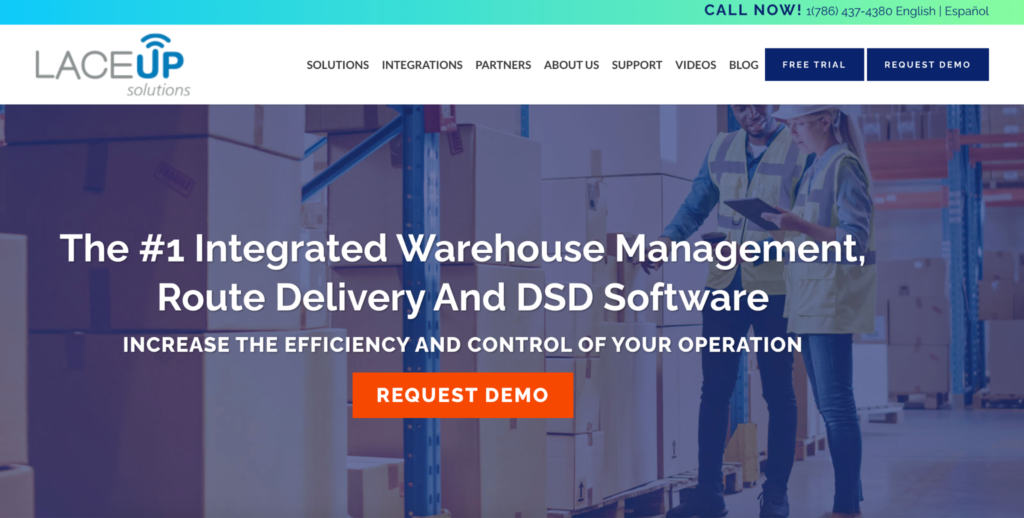
LaceUp Solutions rounds out this list with another platform designed primarily for distribution rather than merchandising.
Its strengths lie in delivery management, truck inventory, route accounting, and supporting distributors working with major retail chains. Although shelf audits aren’t the platform’s primary purpose, many businesses value the operational consistency it brings to customer visits.
Its feature set includes:
- Route accounting
- Delivery tracking
- Mobile invoicing
- Truck inventory
- DEX invoicing
- Multi-ERP integrations
- Customer pricing
LaceUp works best where operational execution inside the store matters just as much as merchandising compliance.
Best for
Wholesale distributors serving chain retailers with structured delivery and compliance requirements.
Why Shelf Data Loses Value Without Sales Data
A perfectly completed shelf audit doesn’t automatically improve sales. Teams can collect hundreds of photos, verify planograms, and score store visits, but those reports become much more valuable when they’re connected to actual customer orders, deliveries, and inventory levels.
That’s one reason some companies are moving toward platforms that combine retail execution with broader field operations. Instead of analyzing merchandising in isolation, managers can compare shelf conditions with sales activity and identify which stores actually need attention.
Retail Execution Metrics That Actually Matter
Retail teams measure dozens of KPIs, but only a handful consistently influence business decisions.
Store visit completion rates help managers understand field coverage. Planogram compliance shows whether products are displayed as intended. Photo documentation provides visual confirmation instead of relying on written notes, while out-of-stock reporting highlights lost sales opportunities before they become larger problems.
The most useful metrics are the ones that lead to action. Dashboards filled with numbers don’t improve execution unless field teams know exactly what needs to change during the next visit.
FAQ
What is retail execution software?
Retail execution software helps field teams manage store visits, shelf audits, merchandising tasks, planogram compliance, photo reporting, and retail data collection.
Who uses retail execution software?
Consumer packaged goods brands, manufacturers, distributors, and merchandising agencies with representatives visiting retail stores.
Does retail execution software include field sales?
Some platforms combine both functions, while others focus exclusively on merchandising and in-store execution.
Is retail execution software the same as DSD software?
No. DSD software manages deliveries and field operations, while retail execution software focuses on in-store compliance and merchandising. Some platforms combine both workflows in one system.
Better Retail Execution Starts With Better Store Visits
Retail execution is about much more than checking boxes during a store visit. The strongest platforms help field teams collect meaningful information, act on it quickly, and connect those insights with the rest of the business. Whether your priority is merchandising, direct store delivery, or both, choosing software that reflects how your teams actually work will deliver the greatest long-term value.